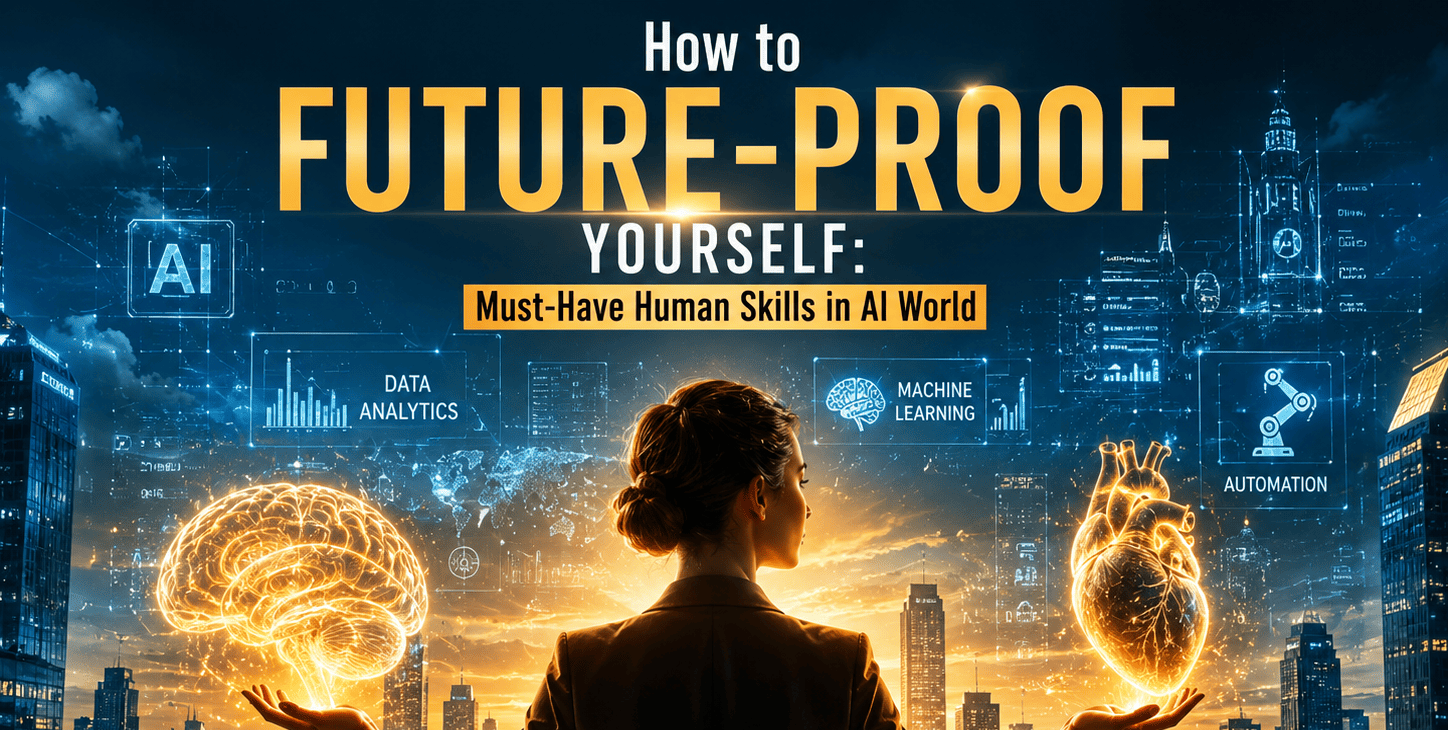
Artificial intelligence is advancing faster than many of us imagined. In 2026, AI tools write reports, create designs, analyze data and even hold conversations that feel almost human. However, this rapid progress does not mean humans are becoming less important. Instead, it highlights what makes us truly unique.
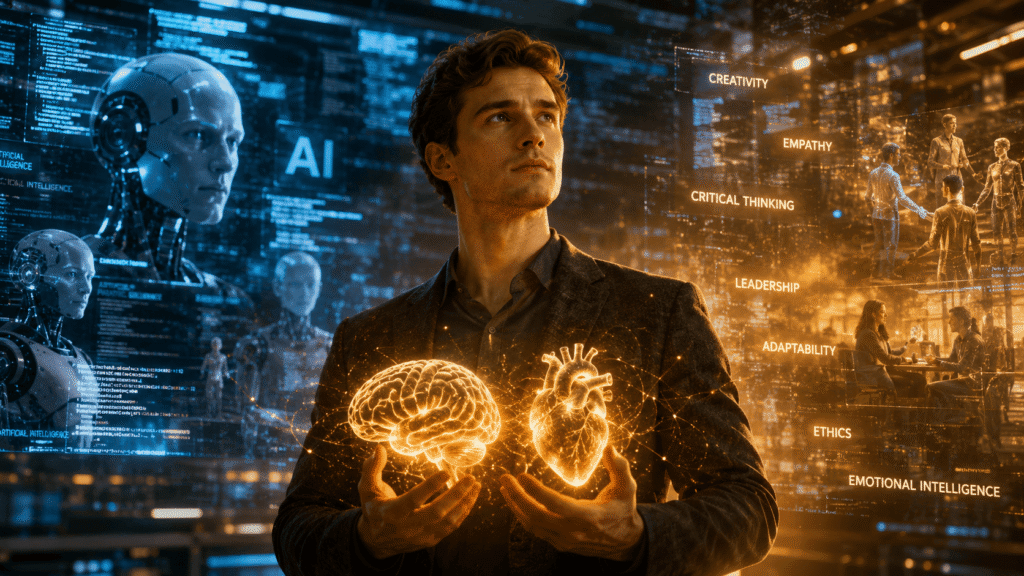
As machines handle routine and repetitive tasks, the skills that set us apart – those deeply rooted in emotion, judgment, creativity and connection – are becoming more valuable than ever. Moreover, reports from organizations like the World Economic Forum and McKinsey confirm this shift. Human skills are not just nice-to-have; they are the real advantage in an AI world.
The Reality of AI in 2026
AI is reshaping jobs at an impressive speed. According to various studies, AI could reshape 50-55% of jobs in the US alone in the coming years. While it creates new opportunities, it also automates many routine tasks.
However, this does not spell the end of human work. On the contrary, it frees us to focus on higher-level contributions. For instance, AI excels at processing information quickly, but it still struggles with genuine understanding, ethical judgment and building real trust. As a result, employers now seek people who can work alongside AI effectively.
Furthermore, the World Economic Forum’s Future of Jobs Report 2025 shows that 39% of core skills are expected to change by 2030. Analytical thinking, creative thinking, resilience and leadership rank among the top skills in demand. Therefore, the winners in this new era will be those who develop irreplaceable human abilities.
1. Emotional Intelligence and Empathy
One of the most powerful human skills is emotional intelligence (EQ) – the ability to understand, manage and influence emotions in ourselves and others.
AI can mimic empathy through scripted responses, yet it cannot truly feel or connect on a deep level. For example, a customer facing a serious problem wants more than a correct answer. They want to feel heard and cared for. Similarly, leaders who show genuine empathy build stronger, more loyal teams.

Moreover, studies highlight that 83% of employees believe uniquely human capabilities like empathy will matter even more in the AI age. Additionally, empathy helps in complex situations such as conflict resolution, team motivation and client relationships – areas where AI often falls short.
How to develop it: Start by practicing active listening. Next, try to understand the emotions behind someone’s words. Over time, this builds stronger connections in both personal and professional life.
2. Creativity and Original Thinking
AI generates impressive content based on existing patterns. However, true creativity involves connecting unrelated ideas in fresh ways and imagining what has never existed before.
This is why creative problem-solving remains highly valued. According to the World Economic Forum, seven out of ten employers rank it as essential. Furthermore, innovation often comes from human curiosity and the courage to experiment, even when the outcome is uncertain.
For instance, while AI can design a logo quickly, a human can understand cultural nuances, emotional impact and brand storytelling in ways machines cannot fully replicate. Therefore, creativity combined with AI tools creates powerful results.

Practical tip: Set aside time for “idea wandering.” Ask “what if” questions daily. Additionally, expose yourself to new experiences, books or cultures. These habits fuel original thinking.
3. Critical Thinking and Ethical Judgment
AI is excellent at analyzing data, but it cannot always determine what is right, fair or meaningful in a specific context.
Critical thinking involves questioning assumptions, spotting biases in AI outputs and making sound decisions. Moreover, ethical judgment helps us navigate grey areas – such as privacy concerns, fairness in hiring or the responsible use of technology.
As AI becomes more widespread, the ability to interpret results, manage exceptions and take responsibility grows even more important. In fact, McKinsey notes that nuanced judgment and situational awareness are areas where humans remain essential.
How to build this skill: Practice evaluating information from multiple angles. Furthermore, discuss ethical dilemmas with others. Over time, you will develop stronger discernment.
4. Adaptability, Resilience and Lifelong Learning
The pace of change in 2026 demands flexibility. Jobs, tools and industries evolve rapidly. Therefore, the ability to adapt, learn quickly and bounce back from setbacks is crucial.
Resilience and agility rank high in the WEF report. Additionally, curiosity and lifelong learning help us stay relevant. People who view challenges as opportunities for growth thrive in uncertain times.

Simple ways to develop adaptability: Embrace small changes daily. Learn one new skill every month. Moreover, reflect on failures and extract lessons. These habits build mental strength over time.
5. Leadership, Collaboration and Relationship Building
AI cannot inspire teams, build trust or create meaningful culture. Human leadership involves motivating others, managing conflict and fostering collaboration.
Furthermore, in hybrid human-AI teams, leaders who communicate vision clearly and build psychological safety stand out. Social influence and talent management are also rising in importance according to recent reports.
Strong relationships remain the foundation of successful organizations. Consequently, investing time in networking, mentoring and teamwork pays rich dividends.
Why These Skills Matter More Now
In an AI-driven world, technology handles speed and scale. However, humans provide meaning, direction and heart. As a result, companies that combine AI efficiency with strong human skills gain a real competitive edge.
Moreover, these skills improve not just careers but overall life satisfaction. They help us navigate personal challenges, build better communities and lead more fulfilling lives.
How to Start Developing These Skills Today
You don’t need expensive courses to begin. Here are practical steps:
- Daily Reflection – Spend 10 minutes journaling about your emotions and interactions.
- Curiosity Practice – Read outside your field or try new hobbies regularly.
- Feedback Loop – Ask trusted people for honest input on your communication and leadership.
- AI as a Partner – Use AI tools for routine work, then apply your human judgment to refine the output.
- Build Community – Join groups or discussions where real conversations happen.
Furthermore, consistency matters more than intensity. Small daily efforts compound into significant growth over months and years.
The Bright Future Ahead
The rise of AI does not diminish human potential. Instead, it amplifies it. By focusing on emotional intelligence, creativity, critical thinking, adaptability and leadership, we position ourselves not just to survive but to thrive.
Moreover, these skills make us better colleagues, leaders, friends and family members. They help create a world where technology serves humanity, rather than the other way around.
The future belongs to those who embrace both AI capabilities and their own uniquely human strengths. Therefore, start investing in yourself today. The skills you build now will shape your opportunities for years to come.
Your ability to feel, connect, create and lead with purpose is something no machine can replicate. In the AI-driven world, these human qualities are your greatest superpower.
Final Thought
Technology will keep evolving, but the core of what makes life meaningful remains deeply human. Focus on developing these skills and you will not only stay relevant – you will stand out.