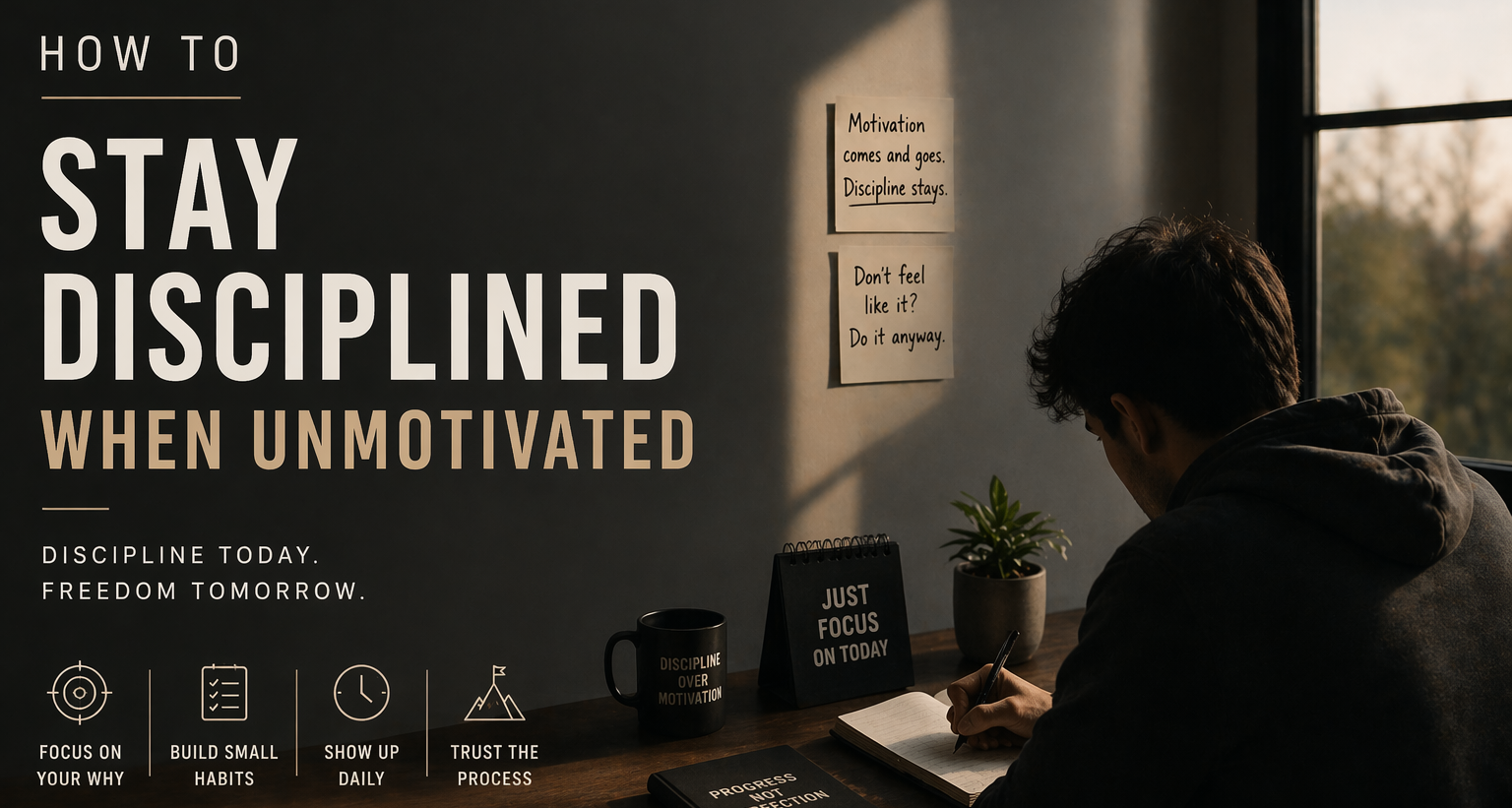
We’ve all been there.
You wake up one Monday morning feeling unstoppable. New gym membership, fresh notebook for that side hustle or that promise to wake up at 5 a.m. – everything feels electric. Ideas are flowing, energy is high and you tell yourself, “This time it’s different.”
For a week, maybe two, you’re on fire. You post progress pics, tell friends about your big plans and everything clicks.
Then… something shifts.
The alarm feels louder. The workouts start feeling repetitive. Writing that next page looks like climbing a mountain. The shiny newness wears off and suddenly the couch is calling your name louder than your goals.
That spark? Gone.
What happens next decides almost everything.
When motivation fades and it always does – discipline has to step in. If it doesn’t, dreams quietly die. If it does, something powerful begins.

Let’s talk about what really happens in that uncomfortable middle phase and why this is where winners are actually made.
Motivation is a Spark – Beautiful but Temporary
Motivation feels amazing because it’s emotional. It’s that rush you get from watching an inspiring video, reading a success story or imagining your future self with six-pack abs, a growing business or a published book.
It’s dopamine in liquid form.
But here’s the hard truth: motivation is not built to last.
It comes from novelty, excitement and external triggers – a new playlist, a motivational quote, seeing someone else crush it. As soon as the newness fades or life throws a curveball (work stress, late nights, family stuff or just plain boredom), motivation packs its bags and leaves.
Psychologists say motivation is largely tied to anticipation of reward and novelty. Once the brain gets used to the routine, that reward signal weakens. The high drops. And without it, most people stop.
That’s why January gyms are packed and March gyms are quiet. That’s why most people have half-finished courses, untouched journals and abandoned side projects.
When motivation fades, you face a fork in the road:

- Path A: Quit and wait for the next spark (which may never come the same way).
- Path B: Keep going anyway – on empty.
Path B is where discipline is born.
What Discipline Actually Feels Like (Hint: It’s Not Heroic)
People picture discipline as some Navy SEAL-level willpower – gritting your teeth, forcing yourself through pain, screaming “mind over matter.”
That’s Hollywood discipline.
Real discipline is quieter. It’s almost boring like brushing your teeth even though you’re exhausted or lacing up your shoes when you feel zero excitement or opening the laptop for 10 minutes when your brain says “later.”
Discipline doesn’t argue with your feelings – it ignores them.
It’s the small voice that says: “You don’t have to feel like it. You just have to do it.”
And here’s the strange part: once you start moving on those empty-tank days, something shifts inside.
The first few steps feel heavy, but momentum builds. Not dramatic momentum – just enough to keep the streak alive and every time you follow through when you don’t feel like it, you deposit a tiny bit of self-trust into your internal bank.
Over weeks, that trust compounds.
You start proving to yourself: “I can count on me.”
That’s when the magic quietly happens.
The Invisible Changes When Discipline Takes the Wheel
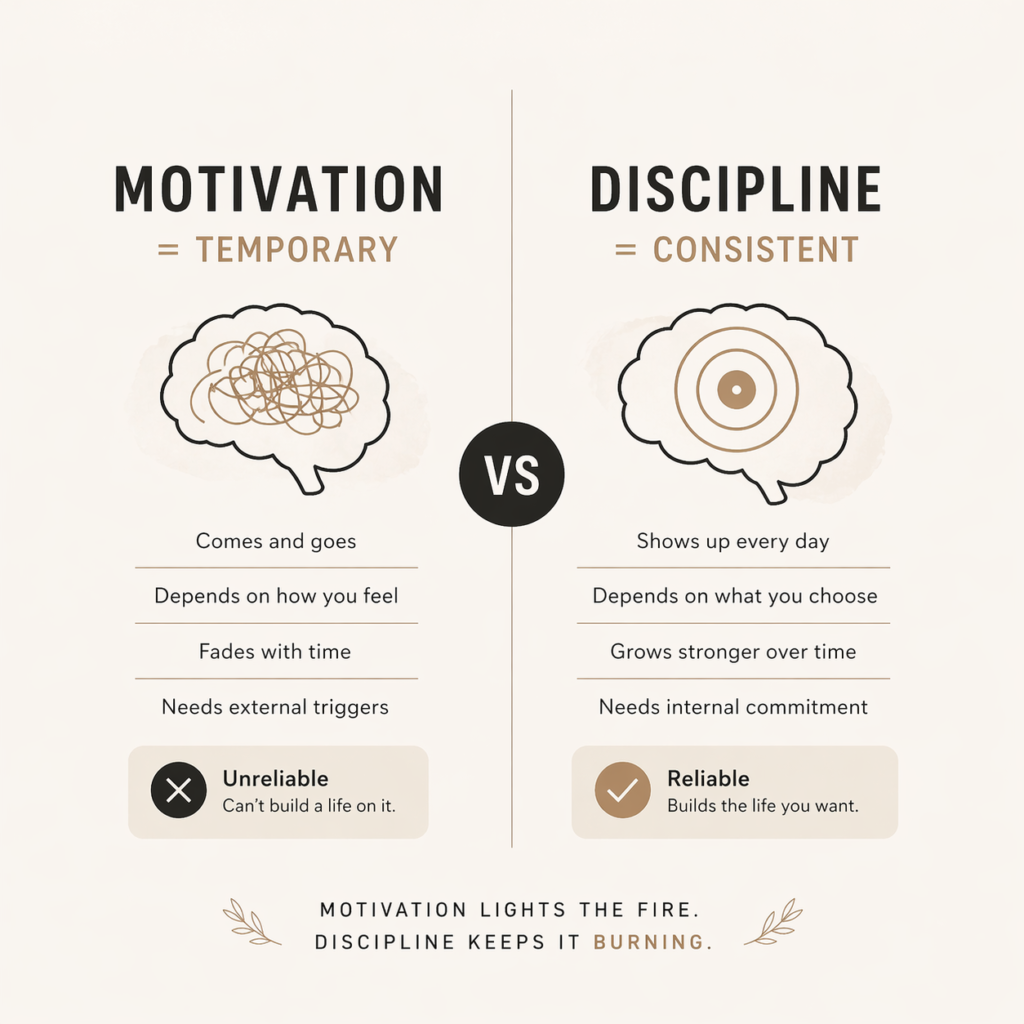
1. Progress becomes automatic
Motivation relies on big emotional highs. Discipline relies on systems.
You stop waiting to “feel ready” and start relying on cues: alarm → shoes → door. Coffee → notebook → 25-minute timer.
The less you think, the more you do.
2. Results start showing up even when feelings don’t
The scale doesn’t care if you were motivated that day. Your code doesn’t compile faster because you felt inspired.
Discipline delivers consistent input → consistent output. And consistency beats intensity almost every time.
3. Motivation actually returns – but differently
Funny thing: after a string of disciplined days, you often get motivated again. But this time it’s not the flashy hype motivation. It’s quieter and seeing real change. The confidence that comes from knowing you’ll show up tomorrow too.
4. Identity shifts
You stop saying “I’m trying to get fit.” You start saying “I’m someone who trains.” The goal moves from something you’re chasing to something you’re becoming. That identity shift is powerful because people don’t break habits that match who they believe they are.
Real-Life Examples: What It Looks Like
- The runner who finishes the marathon isn’t the one who felt excited every single training day. She’s the one who ran in the rain, ran tired, ran when Netflix was tempting because she decided months ago that quitting wasn’t an option.
- The writer who publishes a book didn’t write only on inspired days. He wrote on flat days, angry days, doubtful days. Discipline carried the story when motivation couldn’t.
- The entrepreneur who builds a business survives the “valley of death” not because of endless passion, but because she shipped product, answered emails, and fixed bugs even when the dream felt far away.
In every long-term win, there’s a phase where motivation dies and discipline carries the load.
How to stay disciplined when unmotivated
You don’t need superhuman willpower. You need smart design.
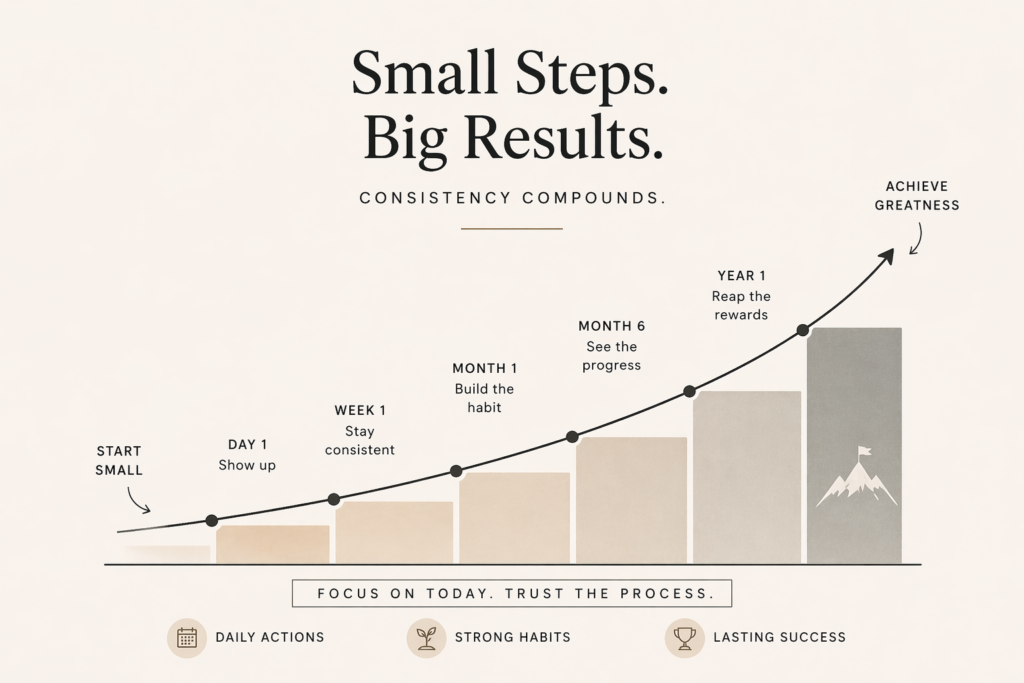
Here are practical ways people actually use:
- Make it stupid small: –Don’t aim for 60-minute workouts when you feel dead. Aim for 5 push-ups. Open the document for 2 minutes. Once you start, you usually keep going. The hardest part is always starting.
- Remove decisions: – Lay out gym clothes the night before. Block your calendar. Pre-cook meals. Fewer choices = less resistance.
- Use the “two-minute rule”: – If a task takes less than two minutes, do it now. Floss one tooth. Write one sentence. Put on running shoes. Small wins snowball.
- Track streaks, not perfection: – Use a simple calendar or app. Put a big X on every day you show up. After 7–10 X, you’ll hate breaking the chain more than you hate the work.
- Reframe the story: – Instead of “I have to do this,” try “This is who I am.” “I’m the kind of person who writes even when it’s hard.” Identity beats motivation every day.
- Celebrate the boring wins: – Finished your workout? Say out loud: “I showed up for myself today.” Small acknowledgments build momentum.
The Long Game: What Discipline Eventually Gives You
After months of showing up when motivation is gone, something beautiful emerges.
- Deep self-respect You know you can trust yourself in hard moments.
- Real results Compound interest of small daily actions creates outcomes that look like overnight success.
- Freedom from mood swings You stop being a slave to how you feel. You decide what happens next.
- A quieter kind of confidence Not loud hype – calm certainty that you’ll figure it out because you’ve already proven it.
And sometimes, motivation circles back but now it’s riding on top of a strong foundation of discipline, not carrying the whole weight alone.
Final Thought
Discipline isn’t something you wait to feel-it’s something you choose to practice, especially on the days when motivation is missing. The truth is, no one feels inspired all the time, but those who succeed are the ones who keep going anyway. Small, consistent actions may not feel powerful in the moment, but over time, they create real and lasting change.
Instead of relying on motivation, build systems that support you. Show up even when it’s hard, keep your promises to yourself and focus on progress not perfection. Some days will be easier than others and that’s completely normal. What matters most is that you don’t stop.
In the end, discipline becomes your strongest advantage. It carries you forward when motivation fades and helps you become the person you’re working to be. Keep going – your future self will thank you.